ÁREA: NEUROCIENCIAS
Objectives and lines of research
Objectives
The proposed research group is distinguished by its multidisciplinary origins, bringing together diverse research profiles: its core structure comprises clinical staff alongside researchers specializing in Biology, Veterinary Science, Chemistry, Physics, and Optics and Optometry.
The group’s objectives focus on:
– Ischemic stroke and intracerebral hemorrhage: Observational studies and the search for prognostic biomarkers. The goal is to investigate the relationship between clinical improvement in patients with ischemic stroke or intracerebral hemorrhage and blood markers of excitotoxicity and inflammation, as well as other time-dependent clinical and neuroimaging variables.
– Study of blood-brain barrier (BBB) impairment and small-vessel disease. Endothelial dysfunction is considered fundamental to the pathological processes of small-vessel disease, which may be implicated in the onset and progression of leukoaraiosis (LA). Currently, there are no sensitive or specific biomarkers to accurately assess BBB dysfunction, LA, or stroke. Nor are there MRI imaging probes capable of providing precise information regarding the BBB.
– Molecular imaging for thrombus characterization in ischemic stroke. While the administration of tissue plasminogen activator (tPA) has improved the prognosis for ischemic stroke patients, its clinical use is limited by a narrow therapeutic window. This is primarily due to the risk of hemorrhagic transformation, which increases over time following symptom onset and depends on the type and size of the thrombus. Specifically, we propose to demonstrate *in vivo* the diagnostic utility of novel dual-function nanoparticles for visualizing and characterizing thrombus structure and size during the acute phase of cerebral ischemia.
– Novel contrast agents for Magnetic Resonance Imaging (MRI). Development and *in vitro* and *in vivo* testing of new magnetic resonance imaging agents based on Gd, Fe, or ¹⁹F compounds to characterize the damaged region.
– Nanomedicine applied to glioblastoma treatment. Within this line of work, the group focuses on developing new brain tumor treatments based on both CAR-T cell immunotherapy and nanomedicine using cytotoxic agents.
– Study of neurological diseases via liquid biopsy. Development of a liquid biopsy for neurological diseases targeting extracellular vesicles (EVs) from cerebral endothelial cells. The main outcome of this project will be a new diagnostic tool to identify patients at risk of developing neurological diseases.
– Design of lactoferrin-loaded lipid nanoparticles (NPLf) for ocular application, biofunctionalized to target TLR2 using neutralizing monoclonal antibodies. These nanoparticles will incorporate a fluorescent probe for microscopy visualization and a chelating agent for biodistribution studies.
– Development of an *ex vivo* keratoconus (KC) model. To this end, we will use corneal epithelial tissue from KC patients (obtained from corneal transplants) and healthy corneas (from donors)—sourced from a tissue biobank—to establish organotypic cultures.
– Ocular TLR2 topography via the study of receptor distribution in the *ex vivo* KC model using NPLf. Confocal microscopy analysis of the distribution pattern (signaling) of targeted nanoparticles across the various layers of KC-affected corneal tissue and healthy donor corneal tissue.
– Therapeutic application of NPLf in the KC model. Use of lactoferrin-loaded nanoparticles (NPLf) as inflammation modulators and TLR2 blockers, achieved through biofunctionalization with neutralizing anti-TLR2 antibodies.
– *In vivo* study of NPLf bioavailability in animal models.
Lines of research
• Ischemic stroke and intracerebral hemorrhage: observational studies and the search for prognostic biomarkers
• Temperature and brain injury
• Study of blood-brain barrier disruption and small vessel disease
• Molecular imaging for thrombus characterization in ischemic stroke
• Novel MRI contrast agents
• Development of MRI sequences and post-processing for brain injury assessment; AI in biomedical applications
• Nanoparticles as vectors for stroke treatment
• Nanomedicine applied to glioblastoma treatment
• Study of neurological diseases via liquid biopsy
• Corneal neurodegenerative diseases
• Theranostics for keratoconus
• Inflammation markers in corneal neurodegenerative diseases
• Innate immunity in corneal ectasias and early diagnostic markers
• Tear proteomics in patients with keratoconus
Research team
Leader
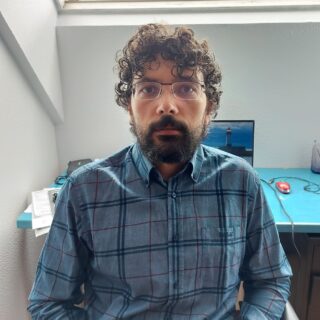
Iglesias Rey, Ramón
Co-leader
Lema Gesto, Isabel
Members
Abengoza Bello, María Teresa
Alvite Piñeiro, Tania
Amodeo Oblitas, Crhistian Mario
Bazarra Barreiros, Marcos
Cao Cancelas, Alejandro
Fernández Rodicio, Sabela
García Acevedo, Pelayo
García Astray, Lucía
González Simón, Inmaculada
Hervella Lorenzo, Pablo
López López, Maite
Mariño Baca, Alba
Ortega Espina, Sara
Pumar Cebreiro, José Manuel
Ramallo Pita, Miriam
Regueiro Lorenzo, Uxía
Rodríguez Fernández, Marta
Sampedro Viana, Ana
Valiño Cultelli, María Victoria
External Collaborator Staff
Castillo Sánchez, José
Guerra Martinuzzi, Alessia
Projects
Ferroptosis y disfunción mitocondrial en queratocono: caracterización por microscopía multifotón y abordaje farmacológico
Project code: PI26/00740
Funding entity: Instiuto de Salud Carlos III
Duration: 2027-2029
Amount: 165.000 €
Pl: Uxía Regueiro / Mª Isabel Lema
Consolidación y estructuración de Unidades de Investigación Competitiva
Project code: IN607A2026-06
Funding entity: Axencia Galega de Innovación
Duration: 2026-2029
Amount: 340.000 €
PI: Ramón Iglesias Rey
Agentes biomoleculares para diagnóstico y prevención de la disfunción de la barrera hematoencefálica
Project code: PI24/00813
Funding entity: Instituto de Salud Carlos III
Duration: 2025-2027
Amount: 177.500 €
PI: Ramón Iglesias Rey
Tromboimaxe molecular por resonancia magnética con nanopartículas de flúor-19 (Tromboimaxe-19F)
Project code: SA304D-PRIS-T-2024/03
Funding entity: Axencia Galega para o Coñecemento en Saúde
Duration: 2024-2025
Amount: 50.000 €
PI: Ramón Iglesias Rey
Identification of imaging biomarkers of thrombosis as a support tool for endovascular therapy in ischemic stroke patients. EBRAINS. EBRAINS Open Calls Management.
Project code: EBRAINS 2.0, European Union’s Research and Innovation Program Horizon Europe (No.101147319)
Funding entity: Horizon Europe 2024
Duration: 2024-2026
Cuantía: 60.000 €
Investigador/a principal: Ramón Iglesias Rey
Sensores Proteicos para Imagen de Resonancia Magnética como diagnostico neurológico
Project code: DTS23/00103
Funding entity: Instituto de Salud Carlos III
Duration: 2024-2025
Amount: 176.000 €
PI: Pablo Hervella Lorenzo
Lactoferrina en el queratocono: estudio biomecánico y aplicación terapéutica nanomolecular.
Project code: PI23/00323
Funding entity: Instituto de Salud Carlos III
Duration: 2024-2026
Amount: 146.250 €
PI: Mª Isabel Lema Gesto; Uxía Regueiro Lorenzo
LipoCART. Nanoparticulas lipidicas para la activacion de CAR-T en tumores cerebrales
Project code: PID2022-141258OB-I00
Funding entity: Ministerio de Ciencia e Innovación
Duration: 2023-2026
Amount: 160.625 €
PI: Pablo Hervella Lorenzo
EURONANOMED2021-113: LDL-like nanoparticles for CAR-T-based lioblastoma immunotherapy
Project code: AC21_2/00014
Funding entity: ERA-NET EuroNanoMed III
Duration: 2022-2025
Amount: 1.226.028 €
PI: Pablo Hervella
Microscopio Multifoton. Instituto de Salud Carlos III.
Project code: IFCS21/00014
Funding entity: Instituto de Salud Carlos III
Duration: 2022-2025
Amount: 1.209.335 €.
PI: Pablo Hervella
Consolidación y estructuración de Unidades de Investigación Competitiva
Project code: IN607A2022-03
Funding entity: Axencia Galega de Innovación
Duration: 2022-2025
Amount: 320.000 €
PI: Ramón Iglesias Rey
Nanopartículas para prevenir el envejecimiento cerebral.
Project code: PI21/01256
Funding entity: Instituto de Salud Carlos III
Duration: 2022-2025
Amount: 208.120 €
PI: Ramón Iglesias Rey
Lead researcher